
Agents you can trust in production
For engineering and operations leaders who want AI agents doing real work - triage, reconciliation, research, routing - without handing them the keys to every system.
Maatara Consulting is an AI-native technology consultancy, with teams in Concord, California and Bengaluru, India, that designs, builds, secures and runs cloud and AI systems. Our agentic AI development puts evaluation, permissions and human approval into the agent from the first sprint.
- Workflow discovery
- Agent design
- Eval set first
- Build and integrate
- Pilot with approvals
- Operate and extend
How We Approach Agentic AI Development
Agentic AI development means building software that plans steps, calls tools and acts toward a goal, instead of answering a single prompt. The hard part is not the model. It is deciding what the agent may touch, how you know it did the right thing, and what happens when it does not.
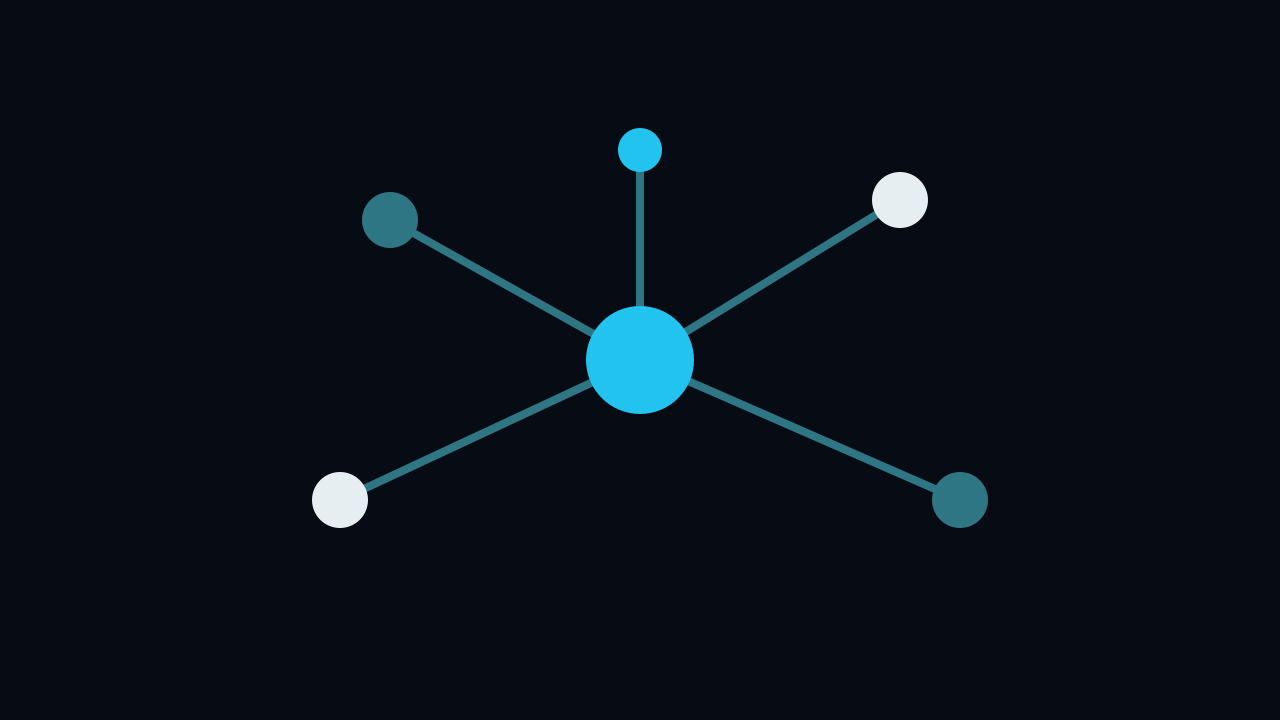
Start from one workflow, not a platform
We pick a single, measurable workflow - ticket triage, invoice matching, incident diagnosis - and build the agent around it. Platforms come later, once one agent has earned its place.
- One workflow, one owner, one success measure
- A pilot you can judge in weeks
Least-privilege tool access
Every tool the agent can call is listed, scoped and logged. Read access comes first; write actions need an explicit grant and, where it matters, a human approval.
- Tools scoped per agent and per environment
- Every call logged with inputs and outputs
Deterministic where it can be
Known cases run on rules and code. The model handles only what rules cannot, which keeps behaviour predictable and cost per task low.
- Rules first, model second
- Lower cost and fewer surprises
Tested like any other release
Agents ship through an eval suite of real tasks, including the edge cases that broke the prototype. A failing score blocks the release.
- Task-level eval suite in CI
- Rollback to the last good version
Four Building Blocks of a Production Agent
Every agent we build has the same four layers, sized to the risk of the workflow.
Planning and orchestration
Single agents or coordinated multi-agent systems, with explicit state, retries and time limits so a run cannot loop forever.
Tools and data access
APIs, databases and internal systems exposed through scoped tools or Model Context Protocol servers, never raw credentials.
Evaluation and guardrails
Task-level evals, input and output checks, and policy rules that stop unsafe or off-scope actions before they happen.
Human-in-the-loop control
Approval steps for actions that change money, data or customers, with every decision logged against the agent version.
Our Agentic AI Development Services
From a first agent on one workflow to a fleet that shares tools, memory and controls.
Agent use-case discovery
Rank candidate workflows by value, risk and data readiness, and pick the first one to build.
Single-agent build
An agent that plans, calls tools and completes one workflow end to end.
Multi-agent systems
Specialist agents that hand work to each other under one orchestrator, with shared state and limits.
Tool and MCP integration
Scoped connectors to your APIs, CRM, ticketing and data stores, including Model Context Protocol servers.
Retrieval and memory
Grounding in your documents and records, with access rules that follow the user, not the agent.
Agent evaluation suites
Golden task sets, scoring and regression runs that gate every prompt, model or tool change.
Approval and review consoles
Screens where people approve, correct or reject agent actions before they take effect.
Local and private models
Agents that run on models inside your estate when data cannot leave it.
Agent operations
Monitoring of success rate, cost per task, latency and drift after launch.
Why Teams Choose Maatara as Their AI Agent Development Company
We build agents the way we build any production system: scoped, tested and observable. Our AI practice is advised by Rudrendu Paul, an applied AI/ML leader with 15+ years of experience, 50+ published papers and open-source contributions to projects including HuggingFace Transformers, Ray and Google ADK. Our own Ops-Intelligence agent proposes fixes and waits for an operator to approve them - the same pattern we bring to your agentic AI development.
Meet the teamAgent prototype stuck in demo mode?
Find out what it needs to survive real traffic and real edge cases.
What Teams Achieve With Production-Grade Agents
These are the commitments every agentic AI development engagement works to.
Logged with inputs, outputs and the agent version that made it
Gated by a task-level eval suite before it reaches users
Cost and latency tracked from the first pilot run
Write actions without an explicit grant or human approval
Typical Deliverables
Everything our agentic AI development team builds is yours: code, prompts, evals and runbooks.
Agent design document
Goal, tools, permissions, approval points and failure handling for each agent.
Working agent in your repo
Source code, prompts and configuration, deployed to your cloud.
Tool connectors
Scoped integrations and MCP servers with tests and access policies.
Evaluation suite
Task sets, scoring rubrics and baseline results that run in CI.
Operations dashboard
Success rate, cost per task, latency and escalations.
Runbook and handover
How to change, roll back and extend the agent safely.
Worried about what an agent can touch?
Get a tool-access and approval design before you write more code.
Agents That Work in Production
Systems we have built where a model makes decisions inside a larger, controlled pipeline.
Ops-Intelligence
AI · Cloud - An agent that watches enterprise applications, correlates signals across dependent services and points to the dependency behind a failure. Known faults run on deterministic rules, a local model handles only new events, and an operator approves every change.
RunQuickSurvey
AI · Build - One survey published to WhatsApp, Telegram, email, web and kiosk, with offline collection, conflict-safe sync and a model that surfaces themes from open-text answers while interviews are still running.
MoreSpace
Build · AI - An index-first pipeline that deduplicates files and moves them between a person's cloud storage accounts, built for around 5 PB of private files with authentication and encryption in transit on every transfer.
Agentic AI Across How You Go to Market
Where agentic AI development pays back depends on who your customers are.
B2B & Enterprise
Agents that take work off operations, finance and IT teams: ticket triage, contract and invoice checks, incident diagnosis. Approval steps keep people in charge of anything that changes a record.
B2C & Platforms
Customer-facing agents that resolve requests end to end, with strict scope, refund limits and a clean hand-off to a person.
D2C & Digital Brands
Agents for catalogue enrichment, order exceptions and support, tuned to your brand voice and cost limits.
Not sure which workflow to automate first?
We rank your candidates by value, risk and data readiness.
Our Agentic AI Development Process
Six steps from one chosen workflow to an agent your team runs and trusts.
-
01
Workflow discovery
Map the current workflow, its systems, owners and the decisions a person makes today.
-
02
Agent design
Define goal, tools, permissions, approval points and the success measure.
-
03
Eval set first
Build the task set and scoring before the agent, so progress is measured from day one.
-
04
Build and integrate
Develop the agent and its tool connectors against the eval set in short iterations.
-
05
Pilot with approvals
Run on real work with every action reviewed, then relax approvals where results earn it.
-
06
Operate and extend
Monitor cost, quality and drift; add the next workflow on the same foundation.
Our Engagement Model
How an agentic AI development engagement runs commercially, from first call to support.
Analysis
Free scoping call and NDA, then a short review of the workflows and systems in scope.
Design
A written proposal with the first agent's scope, milestones, fixed price and success measure.
Development
Weekly builds and demos against the eval set, with your team reviewing results.
Optimization
Prompt, tool and model tuning to raise success rate and cut cost per task.
Deployment
Production launch with approval steps, dashboards and a runbook.
Support
Managed agent operations each month, or a full handover to your engineers.
Agent costs creeping up?
See cost per task, and where rules can replace model calls.
Flexible Engagement Models
Three ways to buy agentic AI development, depending on where you are.
Dedicated team
A dedicated agent team that builds and runs several agents over time, billed monthly.
Hire a teamFixed scope
One agent on one workflow, from design to pilot, at a fixed, milestone-based price.
Get a quoteAdvisory & hourly
Senior review of your agent architecture, tool access or evaluation approach, by the hour.
Book advisoryReady to put an agent to work?
Start with a free agentic AI development scoping call.
Is Agentic AI Development a Fit for You?
A good fit if
- You have a repetitive, multi-step workflow that rules alone cannot handle.
- The systems the agent needs have APIs or can be given one.
- Someone owns the workflow and can judge whether the agent got it right.
- You want agents in production, not a demo.
The wrong start if
- A simple script or workflow tool would do the job.
- There is no data or system access the agent could safely use.
- You need fully autonomous actions with no review on high-risk decisions from day one.
Agentic AI Development FAQs
Agentic AI development is building AI systems that plan a series of steps, call tools such as APIs or databases, and act toward a goal with limited supervision. Unlike a chatbot that answers one question, an agent completes a task. Production agents also need permissions, evaluation and human approval for risky actions.
Still have a question?
Ask an engineer, not a call centre. You get a straight answer within one business day.
Ask our teamAgentic AI development is building AI systems that plan a series of steps, call tools such as APIs or databases, and act toward a goal with limited supervision. Unlike a chatbot that answers one question, an agent completes a task. Production agents also need permissions, evaluation and human approval for risky actions.
A first agent on one well-defined workflow usually reaches a supervised pilot in weeks, not months, because we build the eval set first and integrate only the tools it needs. Timelines depend on how many systems it touches and how clean the data is; we give a dated plan in the proposal.
Three layers. Tools are scoped so the agent can only reach what the workflow needs. Guardrails check inputs, outputs and planned actions against policy. Actions that change money, data or customers wait for a person to approve them, and every call is logged so you can trace any decision.
Start with one agent unless the work clearly splits into specialist roles. Multi-agent systems add coordination cost and new failure modes. We move to them when one agent's prompt and tools become too broad to test well, and we keep a single orchestrator in charge of state and limits.
Yes. When data cannot leave your estate, agents can run on models hosted in your cloud or on your own hardware. Our Ops-Intelligence agent, for example, uses deterministic rules for known faults and a local model only for new events, so data stays inside the environment.
It depends on the number of workflows, tools and approval steps. We price a first agent as a fixed-scope project by milestone, or provide a dedicated team billed monthly. After a free scoping call you get a fixed-price proposal and an estimate of running cost per task.
Ready to Put an Agent to Work?
Tell us which workflow eats your team's time and which systems it touches. An engineer replies within one business day with a first view of whether an agent fits. Every agentic AI development engagement starts with a free consultation.